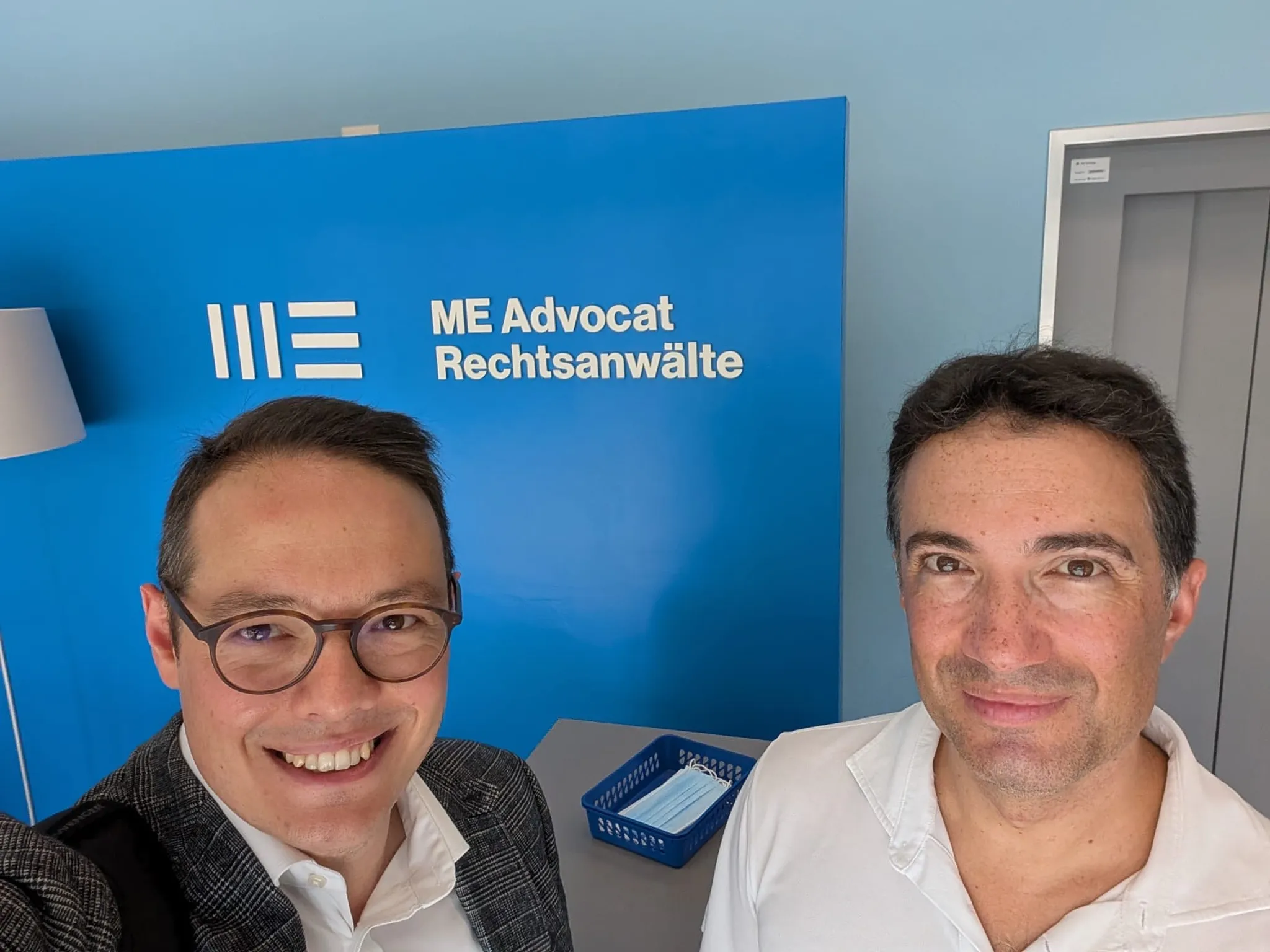
Andrea Caroni combines three roles that rarely intersect: he is a legal expert, an active politician, and an honorary professor. Since December 2024, he has served as President of Switzerland’s Council of States. At the same time, he teaches regularly at the University of St. Gallen, where he brings together academic depth, real-world experience, and political insight. Each role strengthens the others.
What makes a good academic thesis? According to Caroni, two things matter most: “Passion for the topic and a clear goal in mind.” His own doctoral dissertation turned out well because both were present: “I knew I was heading abroad for further studies, and the thesis had to be finished by then. Come what may.”
Curiosity First
When Caroni hears the word “thesis,” he doesn’t think of formal checklists or deadlines. He thinks of motivation: “Curiosity is everything. If you care about the topic, you absorb knowledge like a sponge. If not, it’s a nightmare.”
His advice to students: choose a topic that truly interests you. “Don’t pick something just because others think it’s smart. If you find it boring, you’ll get stuck.” Real-world impact, he argues, doesn’t arise from strategic thinking alone. It begins with genuine curiosity.
At the same time, Caroni sees universities as having an active role to play in promoting engagement: “A university can be a training ground for civic responsibility. It should attract, challenge, and offer a stage.” The University of St. Gallen, he says, is leading by example: “Students there organize an international symposium – not just a lemonade stand.”
The Right People for the Right Topics
As a public figure, Caroni regularly receives interview and collaboration requests. His usual answer: yes – if the topic fits. “Sometimes I get asked about things that no longer relate to my work. A simple Google search would help find the right person.” Strong collaborations between academia and practice, he says, only work when mutual interest and expertise come together. And what about companies?
“It’s part of our responsibility – those of us further along in our careers – to make ourselves available.”
If students come with relevant questions, experts benefit too: “It makes you want to help and you’re genuinely happy when you see the final result.”
Between Middle-earth and the Swiss Constitution
Asked what topic would tempt him into writing another thesis today, Caroni grins: “I always dreamed of writing a constitution for Middle-earth – my favorite fantasy world from The Lord of the Rings.”
While such a topic might not attract much real-world interest, there’s a serious idea behind it: “If you can design a constitution strong enough to constrain Sauron, you could probably use it to restrain some real-world villains too.”
Learning, Frustration – and the Finish Line
Academic work is never free from frustration. Caroni’s advice to students: “Visualize the moment when you finish. Picture it clearly, like a race car driver visualizing the finish line.”
He continues to learn, especially through teaching: “Students ask questions that force me to rethink everything from scratch. I have to revise every case afterwards.”
He also tries to balance the needs of both high-achievers and those who struggle: “I want to support the hardworking – not just motivate the ones hitting the brakes.”
Outlook: More Imagination, More Responsibility
What stays with you after a conversation with Andrea Caroni? Curiosity isn’t a luxury – it’s the starting point of knowledge. Responsibility isn’t abstract – it’s a concrete assignment for universities and practitioners alike. And meaningful research should leave room for imagination: whether for Middle-earth, for Sauron – or for a better world.